
Program Directed by
Avery Stern
If you have questions or would like to talk further about this program, please get in touch!



Meet your fellow student travelers and one or more of your leaders in Los Angeles, California, and fly together to Kona, Hawai'i. To learn more about how we organize travel, click here.
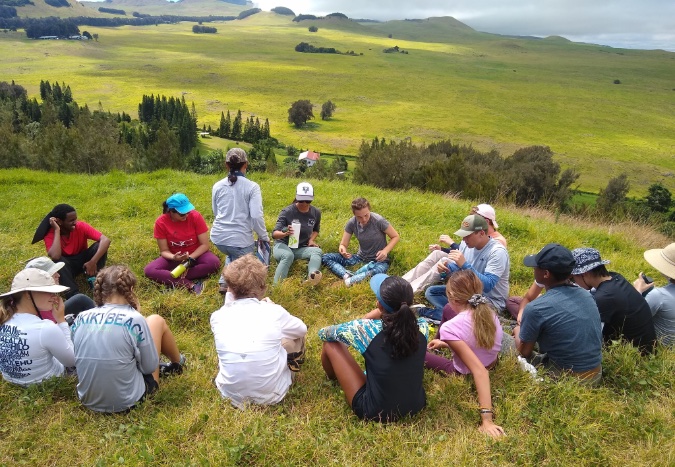
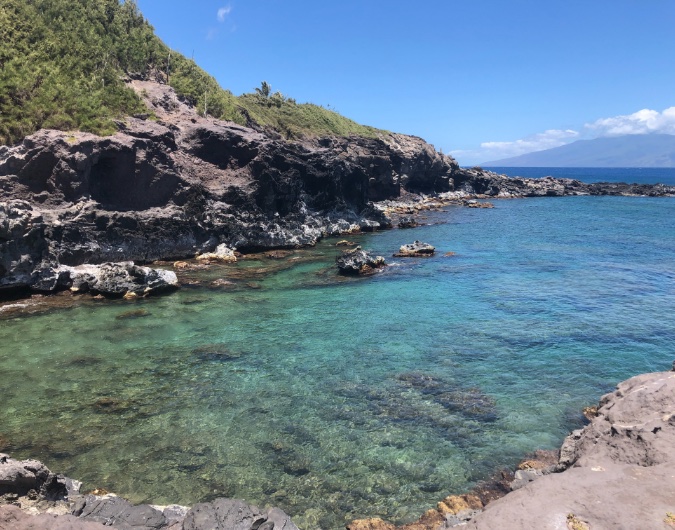
Head northeast to Waimea, home to paniolos, cattle ranches, and rolling grasslands. Get to know your group and participate in an in-depth orientation on your time in Hawai’i. Partner with a local nonprofit organization dedicated to understanding and preserving ancient Hawaiian agricultural practices as you help plant and harvest native crops, clear invasive species, and learn about the island’s many ecosystems and climate zones. Hike to a nearby cinder cone to catch a glimpse of the expansive Kohala Field System and learn how our partners are working hard to revitalize and conserve this land for future generations. In the afternoons after service, head to the beach for a swim, visit a local farm to harvest fresh vegetables, or venture out for a hike in the hills near your accommodations.
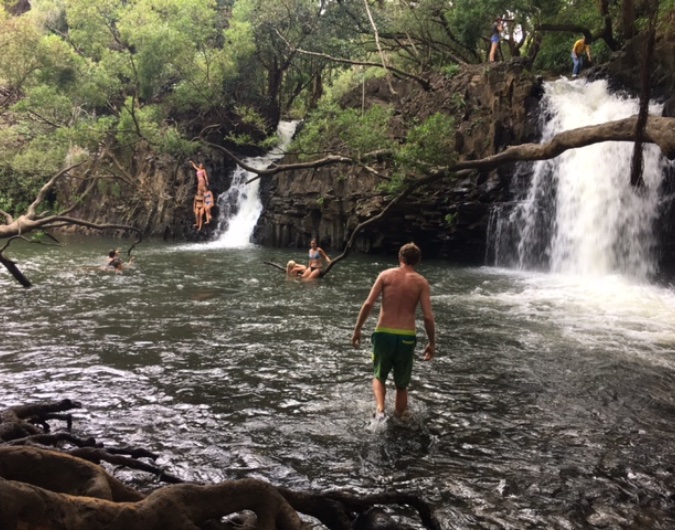
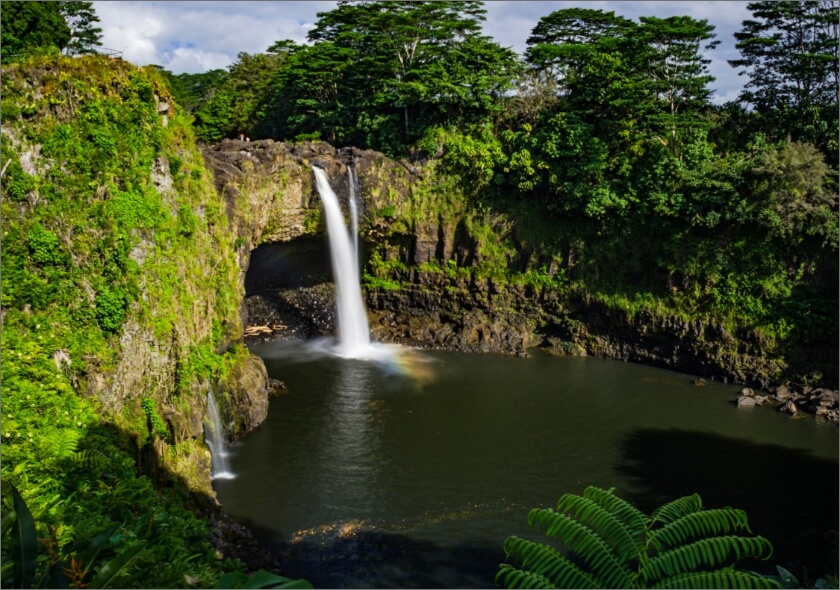
Travel to the Big Island’s lush eastern coast, dotted with waterfalls, tropical rainforests, and beautiful beach parks. Take a break from your service activities while you sample fresh fruits, butter mochi, and other local eats at Hilo’s world-famous farmer’s market. Learn about how ancient Polynesians used celestial navigation to discover the islands while you stargaze atop Mauna Kea. Head out of town to see the towering ‘Akaka Falls, and enjoy some downtime at the beach with your group before heading to your next stop.
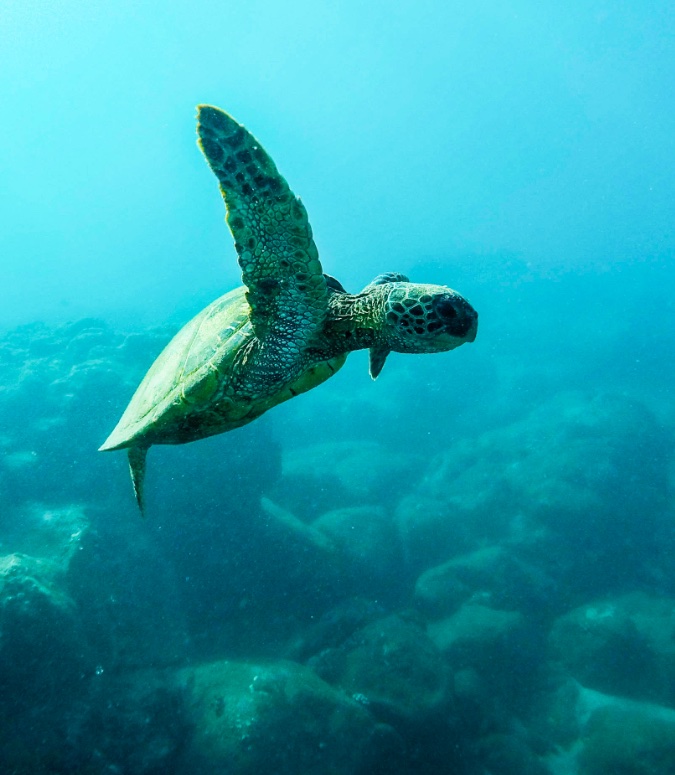
Settle into your cabins less than a mile away from Kilauea Caldera, the most active and researched volcano in the world. Explore the park from the top of Kilauea all the way down to the coastline as you hike through dormant volcanic craters, venture inside old lava tubes, and hunt for ancient Hawaiian petroglyphs. While here, lend a hand to local Hawaiians and nonprofit organizations working to preserve and protect the coastline and wildlife of the vast, remote Kaʻū region. During your free time, head to Punalu’u black sand beach to spot sea turtles, visit a local coffee mill or historical sugar plantation, and participate in a Hawaiian imu ceremony and luau.
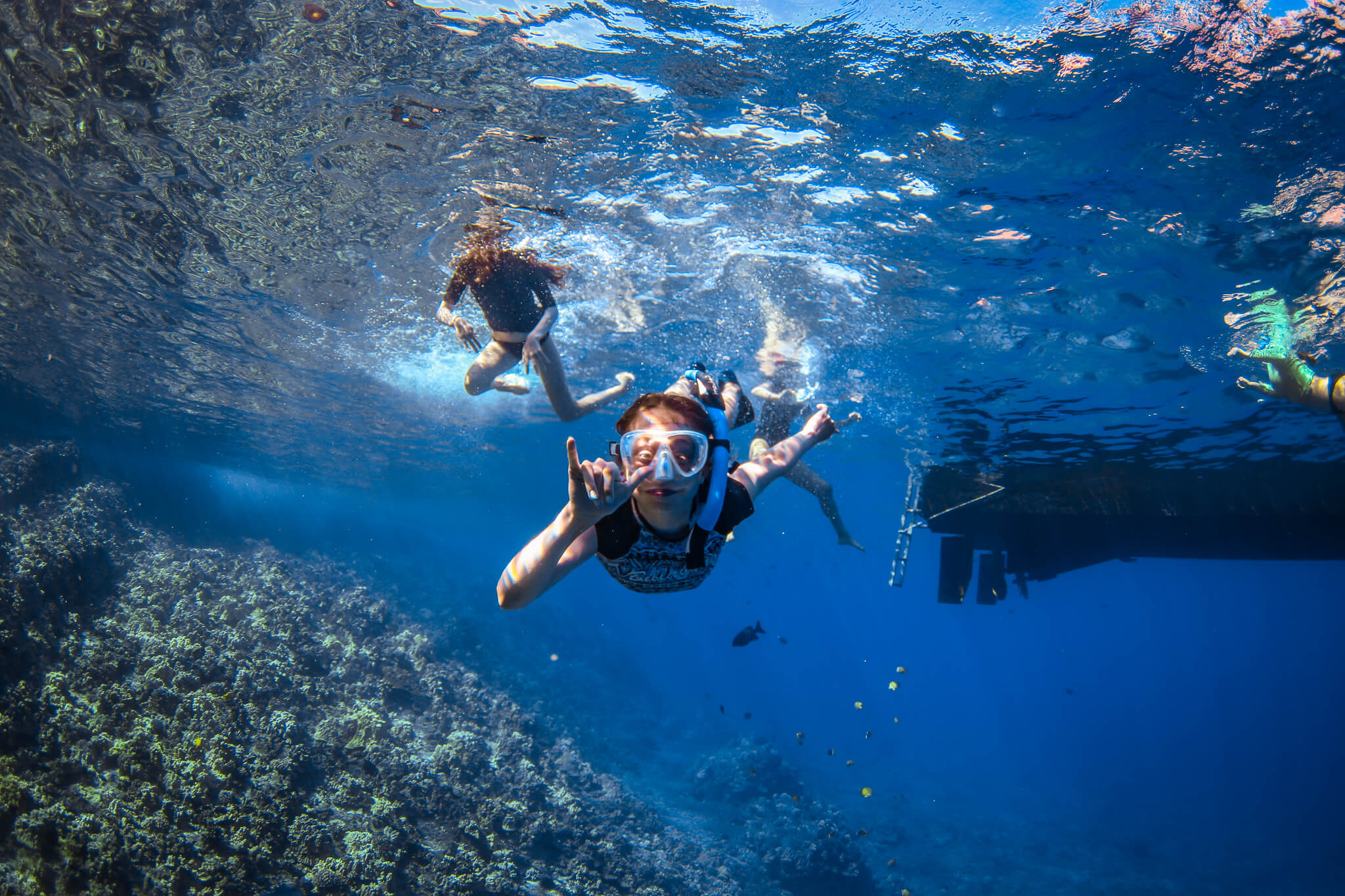
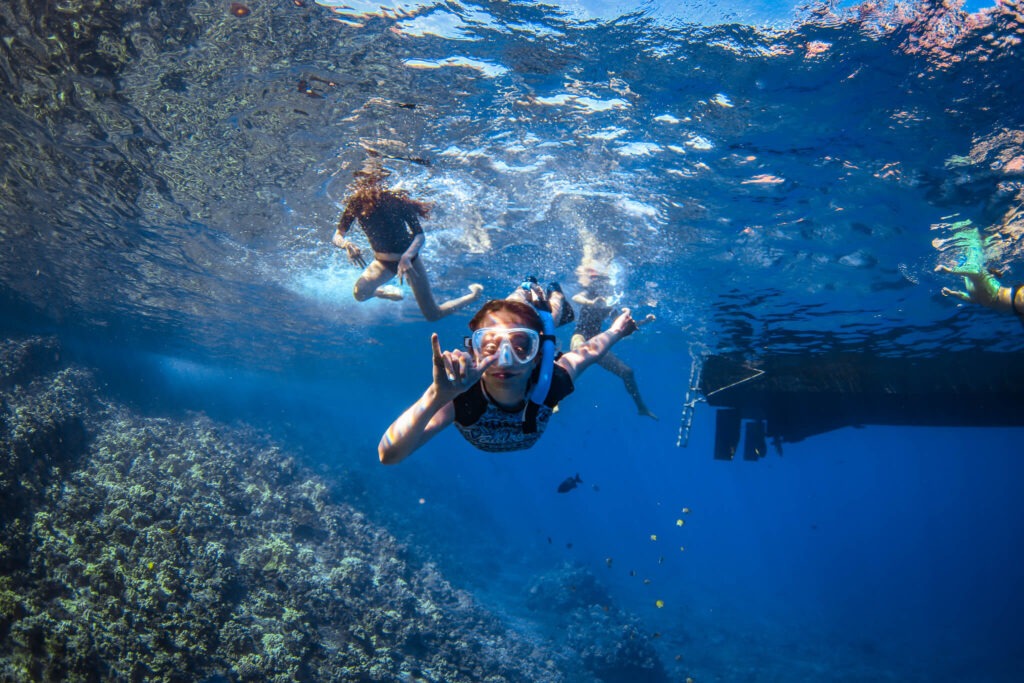
For the end of your program, head to the calm waters of the Big Island’s western coast. Visit the spiritual sanctuary of Puʻuhonua o Hōnaunau to learn more about kapu, an ancient Hawaiian code of conduct. Soak up the last few days with your group as you explore the many shops, restaurants, and cafes of Kona town, and cap off your experience with a morning surf lesson and magical evening snorkel with manta rays, the gentle giants of the ocean.
Fly from Kona to Los Angeles with your group and a leader, then continue on to your final destination. To learn more about how we organize travel, click here.
Putney’s Middle School Service Hawai’i program integrates environmental stewardship with land-based community service. Students are encouraged to arrive ready to learn and apply both modern and traditional ecological practices, and to embrace exploration and adventure on land and in the ocean. This middle school program places a strong emphasis on the learning aspect of service work as well as self-reflection, and gaining independence, all while maintaining a thoughtful balance between service and leisure activities. To learn more about our Service programs click here.
Middle school students on our Hawai’i program can expect to work on several different types of volunteer projects around the island, such as planting native crops to build a protective wind barrier, restoring an old fishing village by clearing debris and trash, and participating in a beach clean-up to maintain and revive wildlife habitats. To learn more about our Service programs click here.
Students on our Middle School Service Hawai’i program can expect to participate in 20–30 service hours during the program. Each student receives a digital service certificate after the program that confirms their completion of these hours. The certificate will specify the exact number of hours completed, based on our host community’s identified projects for the group.
Hawai’i is the only U.S. state with two official languages. While all of our service partners speak English, students also have the chance to learn native Hawaiian chants or “olis” and phrases, and are even encouraged to use their new vocabulary in lieu of their English counterparts!
All students on Putney programs pursue an independent project as a way to more deeply engage with aspects of local culture that are of particular interest to them—in Hawai’i, you might become an expert on the history of hula, write a children’s book inspired by native Hawaiian species, or perfect the recipe for traditional paniolo pancakes.
To help students fully engage and immerse themselves in the Putney Student Travel experience, we do not allow use of cell phones or other internet-connected devices (including tablets, smart watches, laptops, etc.) on our middle school or high school travel programs. Students may have their cell phones during travel to and from the program. During the group’s in-country orientation, program leaders facilitate a call home, then collect and securely store all phones until departure day. Throughout the program, students have the opportunity for a weekly call home according to a pre-arranged schedule. For more details, please see our Approach to Technology.
This is a moderately active summer travel program, and almost all of your time will be spent outside. In addition to physical service work, there are ample opportunities for both moderate and challenging hiking as well as swimming and snorkeling. You do not need to be at peak fitness to participate, but it is important that you have a desire to be physically active, and that you are excited about trying all activities.
Yes, depending on weather conditions, this program may visit one high-altitude destination—Mauna Kea, which reaches an elevation of 9,000 feet/2,743 meters.
In Waimea, the group stays in rooms of 2–4 in a large, shared house on Hawaii Preparatory Academy’s campus. In Volcanoes National Park, we stay in comfortable, 3-person cabins in a campground. In Kona, we stay in dormitory-style rooms of 4–8 at a locally owned hostel. Students are separated according to gender identity at all accommodations. Students have access to common and outdoor spaces at all of our accommodations for group meetings, working on projects, socializing, etc. Leaders reside with students throughout the program.
In Waimea, we take most of our meals at the campus dining hall with occasional dinners out on the town. We often make and pack our own lunches at other stops throughout the program, and frequently enjoy breakfast and dinner in small Hawaiian establishments.
Putney’s Middle School Service Hawai’i program is designed for middle school students (grades 7–8) beginning to travel more independently who are interested in environmental conservation and enjoy outdoor adventure—especially in and around the water, balanced with land-based activities. Our Hawai’i service program is a great fit for middle school students eager for new experiences while still appreciating some familiar cultural structure.
Hawai’i offers students a unique experience that combines natural beauty, strong cultural values, and a deep commitment to land stewardship and ancestral knowledge. Over the course of the program, students move between ocean and inland environments, exploring reefs, working in the hills, and experiencing these values in both service and everyday moments. What truly sets the program apart are the people: Putney’s local partners are deeply passionate about their work, care about teaching students and working with young people, and are genuinely excited to share their knowledge and connection to the land. Several of Putney’s full-time staff have volunteered alongside these partners and have strong personal ties to the work they do. Through these close relationships, students engage in meaningful, community-driven service that brings the spirit of stewardship to life in a way that’s hard to replicate anywhere else.
Our Hawai’i program, because it is domestic, allows for a service experience in an English-speaking setting with many of the familiar foods and cultural norms of our U.S. students. Because of this, the program is a good fit for middle school students and younger travelers who are transitioning out of a summer camp experience and into the world of travel. Additionally, this is the only environmentally focused middle school service program we offer—perfect for students interested in climate change, conservation, and food production.
No specific experience or skills are required for success on this program, aside from coming with an open mind, willingness to try new things, and participating positively in a supportive, small-group environment. It is also helpful if students feel comfortable swimming in open water.
On our Middle School Service Hawai’i program, students build confidence navigating new environments, especially as they transition from family travel or traditional camp experiences to more independent exploration. Along the way, they learn about land stewardship and local agriculture, gaining a deeper appreciation for food systems, ecosystems, and the connections between people, plants, and animals in their own communities.