Check out Oxford Academia programs at University of Oxford
For students currently in grades 9–12
For students currently in grades 6–8
Academic Programs

*These programs are typically for students in grades 9–12, however motivated rising 9th graders will be considered

Special programs & collaborations
Custom Programs

Looking to create a custom program or collaboration?

Challenge yourself academically at the world's most prestigious universities

Non-profit organization offering student travel scholarships

High school youth summit focused on public health, climate change, and equity

columbia-climate-school-icon

Campus-based climate change program for grades 9–12

Engagement & Awareness

Summer Service Programs Abroad for High School & Middle School Students

Our Approach to

Service Programs

Putney Student Travel offers service programs abroad for high school and middle school students in numerous countries throughout Africa, Asia, Latin America, and the South Pacific. Putney service projects make a difference by building friendships and cultural understanding with people in our host communities through common purpose, hard work, accomplishment, and real human connections. 

Our Approach to Service: The Putney Difference

For over three decades, Putney has designed service programs around a simple but consequential belief: that the communities we work with are not waiting to be fixed. We are not an aid organization, and we do not subscribe to the colonialist view that we are providing knowledge, resources, or improvements to struggling people and communities that, without our participation, would not accomplish for themselves. Our partner communities have their own leadership, their own priorities, and their own vision for what they need. Together with our students, our role is to show up as collaborators, not rescuers.

With seven decades of experience in educational student travel under our belts, and three decades of summer service programs, we see service as a powerful catalyst for building cross-cultural friendship and understanding.

In practice, this means that the community determines the project our group works on. Before students arrive, we work closely with local governing bodies and longstanding partners to understand where an outside team can genuinely help. This is what we mean when we use the word “collaborate.” It’s not a softer synonym for “volunteer”--it means the host community has agency, the work is theirs to define, and we are there to contribute, in collaboration.

Service Types: What Students Actually Do

Middle and high school students learn through collaborative and relevant community service projects in small, rural communities abroad. Together with the host community, we prioritize community goals, safety, and skill level to determine projects that provide realistic opportunities for our groups to contribute to high quality and relevant work. Service project types vary by destination and are always determined by community need, but they generally fall into three areas:

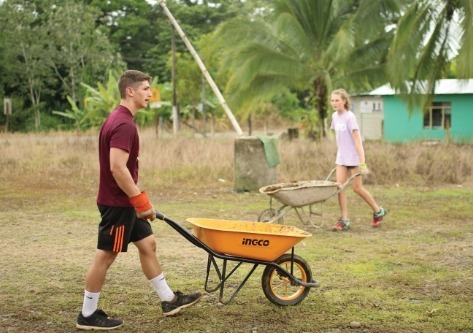
  • Building & Infrastructure: Build or repair a school, community center, or housing for local families. Collaborate on community infrastructure, such as water access projects. This is physical, tangible work. Students leave something behind that wasn’t there before they arrived, and return home with deeper cultural understanding and global perspective.
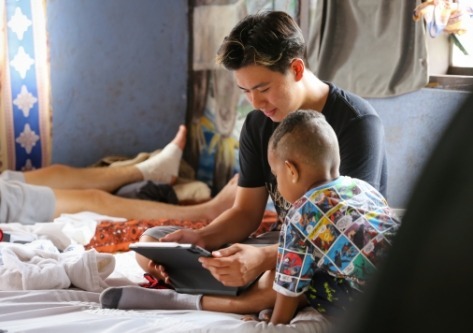
  • Education & Youth Programs: Work with teachers to develop lesson plans, tutor in English, organize summer camps or after-school activities for local children. This requires patience and creativity, and fosters connections and perspective.
  • Environment & Conservation: Restore habitats, join reforestation efforts, and monitor wildlife, particularly in places where conservation is central to the community’s identity and economy, gaining a deeper understanding of local and global issues.

Through their service projects, students immerse themselves in their host community, learn new skills from local experts in construction, teaching, and conservation, and build friendships across cultural and linguistic boundaries. Every summer, Putney students return home changed by their experience abroad, discovering an important truth about service: In working alongside our hosts to support community goals, we gain as much as we give.

Relationships That Last Decades

We’ve been running service programs since the early 1990s, and many of the communities we work with today are the same communities we started with. In some cases, our students are returning to communities their parents visited with Putney a generation ago. In a number of our partner communities, we have watched children grow into young adults, sometimes joining Putney programs later as group leaders or experts.

These aren’t vendor relationships. They are genuine partnerships, built over years of working together, showing up, listening, building trust. When a community knows Putney will be back next summer, and the summer after that, it changes the nature of the work. Projects can continue across years, leaders become friends with community members, and Putney students arrive not as strangers, but as the latest in a line of people who have come to care about the people and the place.

This continuity is important, as it generates trust, accountability, and mutual respect. This commitment is the foundation for all of our collaborations, from communities where we have decades of history together to budding new relationships as we grow. It is something a short-term program, or one that rotates for variety, simply can’t replicate. It’s one of many ways that 75 years of history makes a big difference.

Why Service Program Length Matters

Because we believe service programs are just as much about building relationships, connections, perspectives, we also believe program duration is enormously significant. To be direct, we don’t think an 8-day or 9-day service program offers much of value to either the students or the host communities.

That’s not a popular position in a field that offers a lot of one-week programs, but it follows directly from our philosophy: if service is really about building connection and understanding across cultures, not just completing tasks, a week isn’t enough time for either to happen. Meaningful relationships take longer than a week, and students aren’t meaningfully changed in a week. The real growth comes after the discomfort and the adjustment period pass, and when students begin to feel at home and transition into taking ownership of their experience.

Putney service programs run two to four weeks, because that’s the minimum we believe is necessary for real impact on both students and our host communities.

Independent Student Projects

On both our middle and high school service programs, each student designs an independent project to engage in local life. Trip leaders offer guidance and support to help create a project tailored to the interests of the student. The student then shapes the project and shares it with the entire group and community at the end of the program. In addition to the final project itself, the process is about encouraging curiosity, initiative, and a willingness to engage with people and place. Independent projects often create some of the most lasting and memorable moments for students.

Examples of Student Independent Projects:

  • Organize a sporting event
  • Learn to play a traditional instrument
  • Shadow a dairy farmer
  • Document a day in the life of a local teenager
  • Make repairs to the goal at the village soccer pitch
  • Interview farmers about the harvest
  • Organize a mural painting activity with local schoolchildren

Activities, Excursions, & Cultural Connections

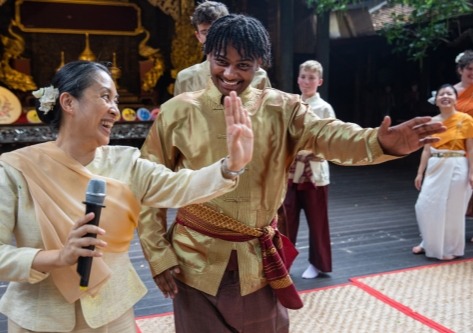
Our service programs extend beyond the local host community to include opportunities for unique and authentic cultural experiences. Throughout the trip, groups take excursions from the host community to explore the cultural richness and scenic beauty of the region in which they’re based. These experiences are fun and offer a short break from the physicality of service, but they also serve to broaden students’ perspective and experience of a place.

Examples of Excursions & Activities

  • Learn to surf in the Moroccan beach town of Essaouira
  • Bike along the Urubamba River in the Sacred Valley of Peru
  • Snorkel with sea lions in the Galápagos Islands off of Ecuador
  • Visit a floating village in Vietnam’s Ha Long Bay
  • Walk with Maasai warriors across ancestral lands in Tanzania

Who Leads Putney Service Programs

We choose accomplished, responsible, and inspiring service group leaders who bring a wealth of talent and wisdom to our student travel programs. Many hold multiple bachelor’s or advanced degrees in areas of study that have prepared them for community service leadership roles, including International Education, International Business, Industrial Design, Human Development, Intercultural Relations, Conservation Biology, Anthropology, Outdoor Recreation, and Religious Studies, to name a few. Many have experience working with youth and teaching English as a Second Language (ESL), and each is comfortable navigating the culture of the host country, with extensive experience in international living and travel.

In short, our incredible leaders are poised to help students get the most out of their summer service experience and emerge with a deeper understanding of themselves and the world. Click here to learn about what sets our leaders apart.

Student Outcomes: What It Takes to Succeed on a Putney Service Program

Service programs are enormously fun and rewarding, and they are also not easy. To succeed on a Putney service program, you must be willing to work hard, be sensitive toward others, be excited to collaborate with your host community, and have the ability to live simply. Upon completion of your program, Putney awards a certificate verifying the 30–100 hours of service, depending on the program length and the work completed. Students also return home with something less tangible, but also somehow more durable: a changed sense of their own place in the world, and what they’re capable of.

student-learning-from-local-in-thailand

Community Impact

Putney groups work alongside local people and with respected community-based organizations, connecting through purposeful work and learning across cultures. Students learn from local experts the purpose and proper technique for every task of the project, and leave feeling connected both to the process and outcome of the work.

students-pushing-wheelbarrow-service-costa-rica

Ethical Service

Putney partners with host communities and trusted local contacts. Since developing our first service programs in the early 1990s, our aim is always to develop long-term relationships. Projects are identified by working closely with the local governing body to assess the greatest need and potential for lasting and meaningful impact in the community.

student-reading-with-local

Personal Growth

Putney service students step out of their comfort zone, learn and practice cultural humility, examine their own beliefs, and reflect on their own cultures while learning about another. In doing so, they broaden their perspectives, explore their sense of purpose, and tap into their leadership potential to make positive change in their home communities.

“He gained global, cultural, and socioeconomic awareness, personal growth and development, a greater sense of purpose, and an ability to impact others by giving of his time and effort.”

— Amanda & Jonathan C., Excelsior, MN

Summer 2026

Middle School Service Programs

Learn More
Learn More
Learn More
Summer 2026

High School Service Programs

Learn More
Learn More
Learn More
Learn More
Learn More
Learn More
Learn More
Learn More
Learn More
Learn More

Looking for something specific?

Australia & Fiji
Australia, New Zealand, & Fiji
Croatia & Slovenia
Iceland
Italy & Greece
Japan
Kilimanjaro
Patagonia: Skiing
Switzerland, France, & Holland
Switzerland, Italy, France, & Holland
France
China
Ecuador & the Galápagos
Spain
Valencia & the Pyrenees
Costa Rica
Ecuador & the Galápagos
Hawai'i
Jamaica
Morocco
Nepal
Peru
Tanzania
Thailand
Vietnam
Japan
Alaska
Iceland
France & Holland
Greece & Italy
France
Spain
Costa Rica
Ecuador & the Galápagos
Hawai'i
Eligible for 8th grade*​
Columbia Climate School Collaboration
Harvard Chan C-CHANGE Youth Summit
Oxford Academia
*These programs are typically for students in grades 9–12, however motivated rising 9th graders will be considered
Summer Service Programs Abroad for Teens
Engagement & Awareness

Summer Service Programs Abroad for High School & Middle School Students

Our Approach to

Service Programs

Putney Student Travel offers service programs abroad for high school and middle school students in numerous countries throughout Africa, Asia, Latin America, and the South Pacific. Putney service projects make a difference by building friendships and cultural understanding with people in our host communities through common purpose, hard work, accomplishment, and real human connections. 

Our Approach to Service: The Putney Difference

For over three decades, Putney has designed service programs around a simple but consequential belief: that the communities we work with are not waiting to be fixed. We are not an aid organization, and we do not subscribe to the colonialist view that we are providing knowledge, resources, or improvements to struggling people and communities that, without our participation, would not accomplish for themselves. Our partner communities have their own leadership, their own priorities, and their own vision for what they need. Together with our students, our role is to show up as collaborators, not rescuers.

With seven decades of experience in educational student travel under our belts, and three decades of summer service programs, we see service as a powerful catalyst for building cross-cultural friendship and understanding.

In practice, this means that the community determines the project our group works on. Before students arrive, we work closely with local governing bodies and longstanding partners to understand where an outside team can genuinely help. This is what we mean when we use the word “collaborate.” It’s not a softer synonym for “volunteer”--it means the host community has agency, the work is theirs to define, and we are there to contribute, in collaboration.

Service Types: What Students Actually Do

Middle and high school students learn through collaborative and relevant community service projects in small, rural communities abroad. Together with the host community, we prioritize community goals, safety, and skill level to determine projects that provide realistic opportunities for our groups to contribute to high quality and relevant work. Service project types vary by destination and are always determined by community need, but they generally fall into three areas:

  • Building & Infrastructure: Build or repair a school, community center, or housing for local families. Collaborate on community infrastructure, such as water access projects. This is physical, tangible work. Students leave something behind that wasn’t there before they arrived, and return home with deeper cultural understanding and global perspective.
  • Education & Youth Programs: Work with teachers to develop lesson plans, tutor in English, organize summer camps or after-school activities for local children. This requires patience and creativity, and fosters connections and perspective.
  • Environment & Conservation: Restore habitats, join reforestation efforts, and monitor wildlife, particularly in places where conservation is central to the community’s identity and economy, gaining a deeper understanding of local and global issues.

Through their service projects, students immerse themselves in their host community, learn new skills from local experts in construction, teaching, and conservation, and build friendships across cultural and linguistic boundaries. Every summer, Putney students return home changed by their experience abroad, discovering an important truth about service: In working alongside our hosts to support community goals, we gain as much as we give.

Relationships That Last Decades

We’ve been running service programs since the early 1990s, and many of the communities we work with today are the same communities we started with. In some cases, our students are returning to communities their parents visited with Putney a generation ago. In a number of our partner communities, we have watched children grow into young adults, sometimes joining Putney programs later as group leaders or experts.

These aren’t vendor relationships. They are genuine partnerships, built over years of working together, showing up, listening, building trust. When a community knows Putney will be back next summer, and the summer after that, it changes the nature of the work. Projects can continue across years, leaders become friends with community members, and Putney students arrive not as strangers, but as the latest in a line of people who have come to care about the people and the place.

This continuity is important, as it generates trust, accountability, and mutual respect. This commitment is the foundation for all of our collaborations, from communities where we have decades of history together to budding new relationships as we grow. It is something a short-term program, or one that rotates for variety, simply can’t replicate. It’s one of many ways that 75 years of history makes a big difference.

Why Service Program Length Matters

Because we believe service programs are just as much about building relationships, connections, perspectives, we also believe program duration is enormously significant. To be direct, we don’t think an 8-day or 9-day service program offers much of value to either the students or the host communities.

That’s not a popular position in a field that offers a lot of one-week programs, but it follows directly from our philosophy: if service is really about building connection and understanding across cultures, not just completing tasks, a week isn’t enough time for either to happen. Meaningful relationships take longer than a week, and students aren’t meaningfully changed in a week. The real growth comes after the discomfort and the adjustment period pass, and when students begin to feel at home and transition into taking ownership of their experience.

Putney service programs run two to four weeks, because that’s the minimum we believe is necessary for real impact on both students and our host communities.

Independent Student Projects

On both our middle and high school service programs, each student designs an independent project to engage in local life. Trip leaders offer guidance and support to help create a project tailored to the interests of the student. The student then shapes the project and shares it with the entire group and community at the end of the program. In addition to the final project itself, the process is about encouraging curiosity, initiative, and a willingness to engage with people and place. Independent projects often create some of the most lasting and memorable moments for students.

Examples of Student Independent Projects:

  • Organize a sporting event
  • Learn to play a traditional instrument
  • Shadow a dairy farmer
  • Document a day in the life of a local teenager
  • Make repairs to the goal at the village soccer pitch
  • Interview farmers about the harvest
  • Organize a mural painting activity with local schoolchildren

Activities, Excursions, & Cultural Connections

Our service programs extend beyond the local host community to include opportunities for unique and authentic cultural experiences. Throughout the trip, groups take excursions from the host community to explore the cultural richness and scenic beauty of the region in which they’re based. These experiences are fun and offer a short break from the physicality of service, but they also serve to broaden students’ perspective and experience of a place.

Examples of Excursions & Activities

  • Learn to surf in the Moroccan beach town of Essaouira
  • Bike along the Urubamba River in the Sacred Valley of Peru
  • Snorkel with sea lions in the Galápagos Islands off of Ecuador
  • Visit a floating village in Vietnam’s Ha Long Bay
  • Walk with Maasai warriors across ancestral lands in Tanzania

Who Leads Putney Service Programs

We choose accomplished, responsible, and inspiring service group leaders who bring a wealth of talent and wisdom to our student travel programs. Many hold multiple bachelor’s or advanced degrees in areas of study that have prepared them for community service leadership roles, including International Education, International Business, Industrial Design, Human Development, Intercultural Relations, Conservation Biology, Anthropology, Outdoor Recreation, and Religious Studies, to name a few. Many have experience working with youth and teaching English as a Second Language (ESL), and each is comfortable navigating the culture of the host country, with extensive experience in international living and travel.

In short, our incredible leaders are poised to help students get the most out of their summer service experience and emerge with a deeper understanding of themselves and the world. Click here to learn about what sets our leaders apart.

Student Outcomes: What It Takes to Succeed on a Putney Service Program

Service programs are enormously fun and rewarding, and they are also not easy. To succeed on a Putney service program, you must be willing to work hard, be sensitive toward others, be excited to collaborate with your host community, and have the ability to live simply. Upon completion of your program, Putney awards a certificate verifying the 30–100 hours of service, depending on the program length and the work completed. Students also return home with something less tangible, but also somehow more durable: a changed sense of their own place in the world, and what they’re capable of.

student-learning-from-local-in-thailand

Community Impact

Putney groups work alongside local people and with respected community-based organizations, connecting through purposeful work and learning across cultures. Students learn from local experts the purpose and proper technique for every task of the project, and leave feeling connected both to the process and outcome of the work.

students-pushing-wheelbarrow-service-costa-rica

Ethical Service

Putney partners with host communities and trusted local contacts. Since developing our first service programs in the early 1990s, our aim is always to develop long-term relationships. Projects are identified by working closely with the local governing body to assess the greatest need and potential for lasting and meaningful impact in the community.

student-reading-with-local

Personal Growth

Putney service students step out of their comfort zone, learn and practice cultural humility, examine their own beliefs, and reflect on their own cultures while learning about another. In doing so, they broaden their perspectives, explore their sense of purpose, and tap into their leadership potential to make positive change in their home communities.

“He gained global, cultural, and socioeconomic awareness, personal growth and development, a greater sense of purpose, and an ability to impact others by giving of his time and effort.”

— Amanda & Jonathan C., Excelsior, MN

Summer 2026

Middle School Service Programs

Learn More
Learn More
Learn More
Summer 2026

High School Service Programs

Learn More
Learn More
Learn More
Learn More
Learn More
Learn More
Learn More
Learn More
Learn More
Learn More

Looking for something specific?

Questions?
We'd love to chat! Schedule a call our admissions team.

Be the first to know!

Be the first to get program updates, hear alumni stories, and stay in the know as we celebrate 75 years of trusted travel programs!

No spam, just inspiring stories and useful info.