Program Directed by
Julian Hartmann-Russell
If you have questions or would like to talk further about this program, please get in touch!



Meet your fellow high school student travelers and one or more of your leaders in Newark, and fly together to Geneva, Switzerland. To learn more about how we organize travel, click here.
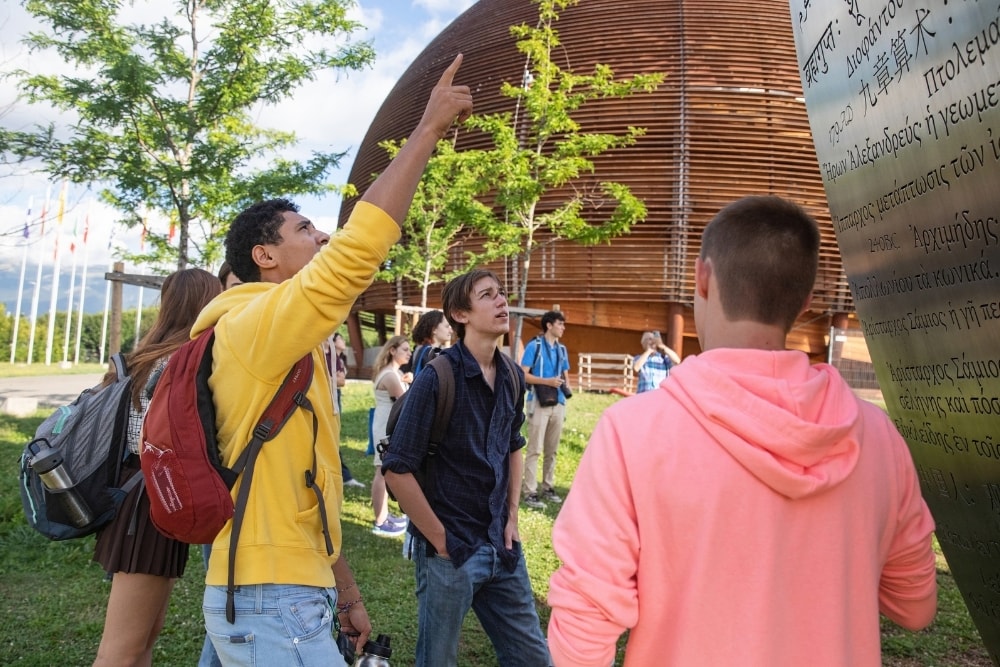
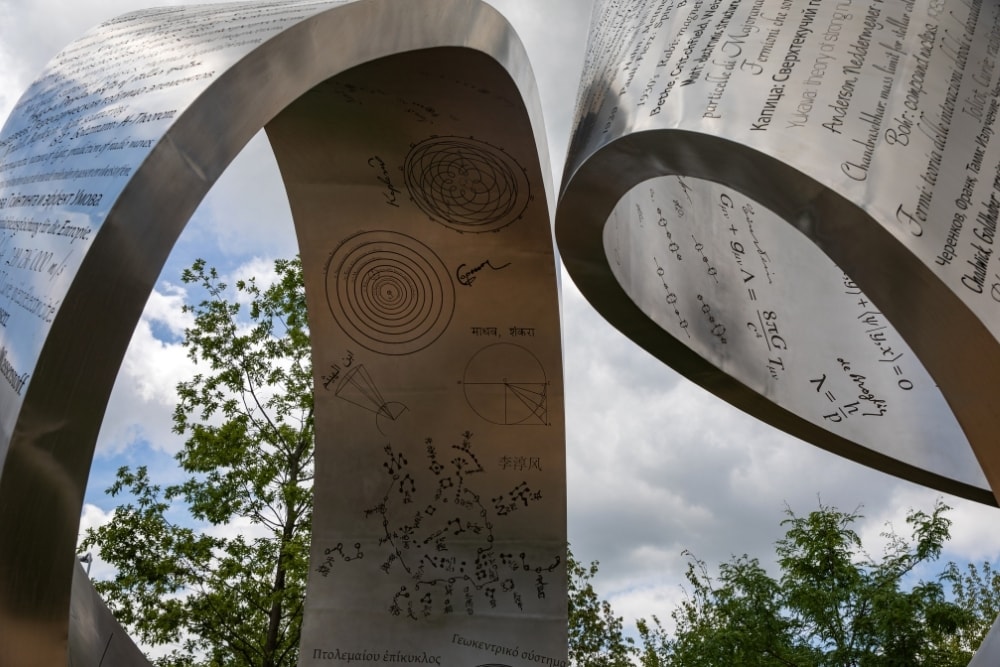
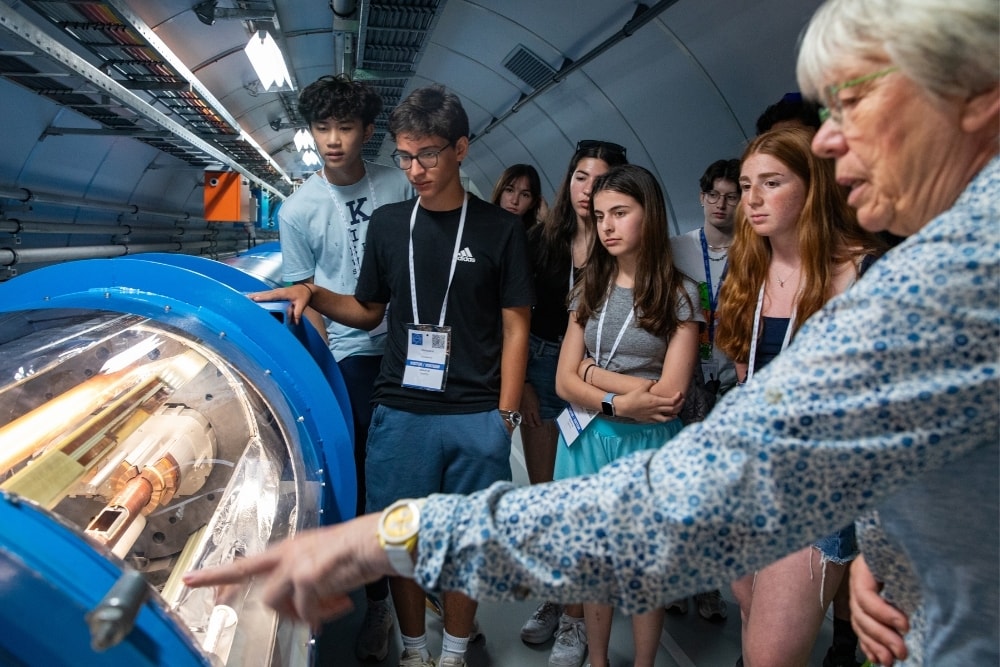
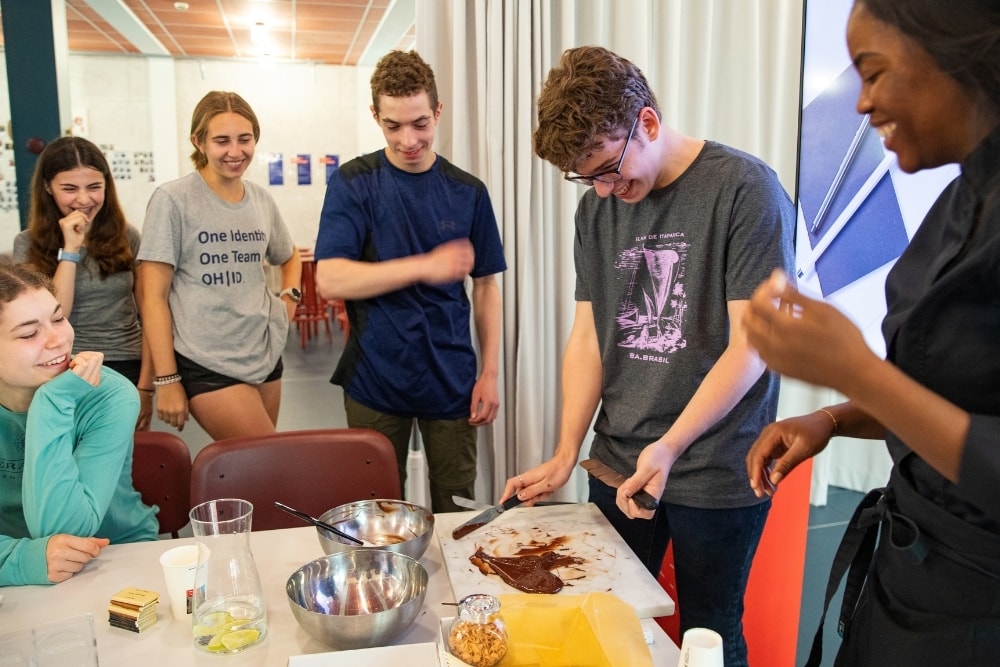
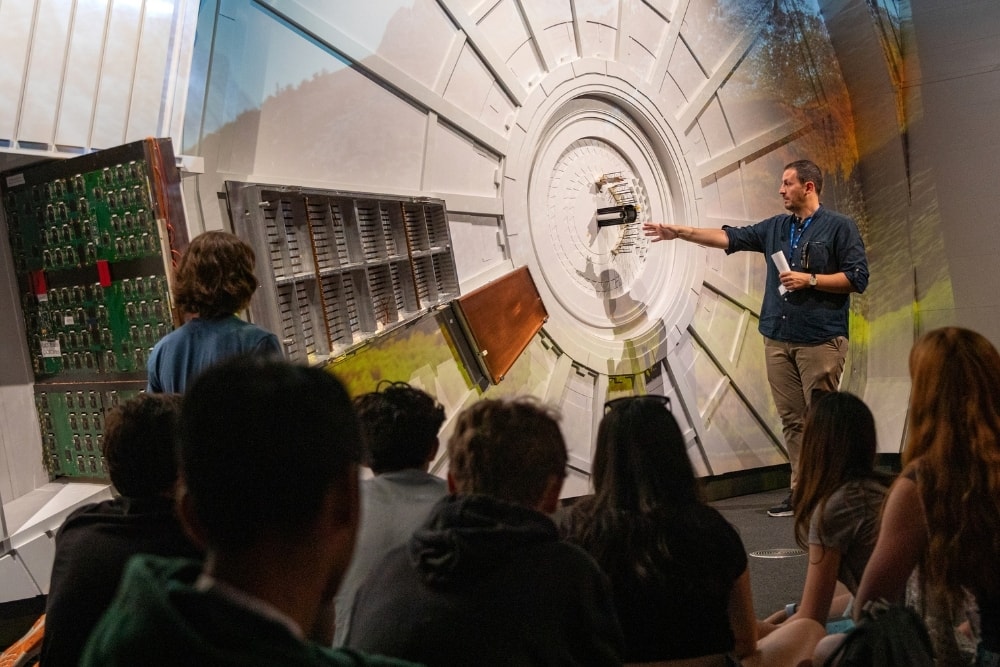
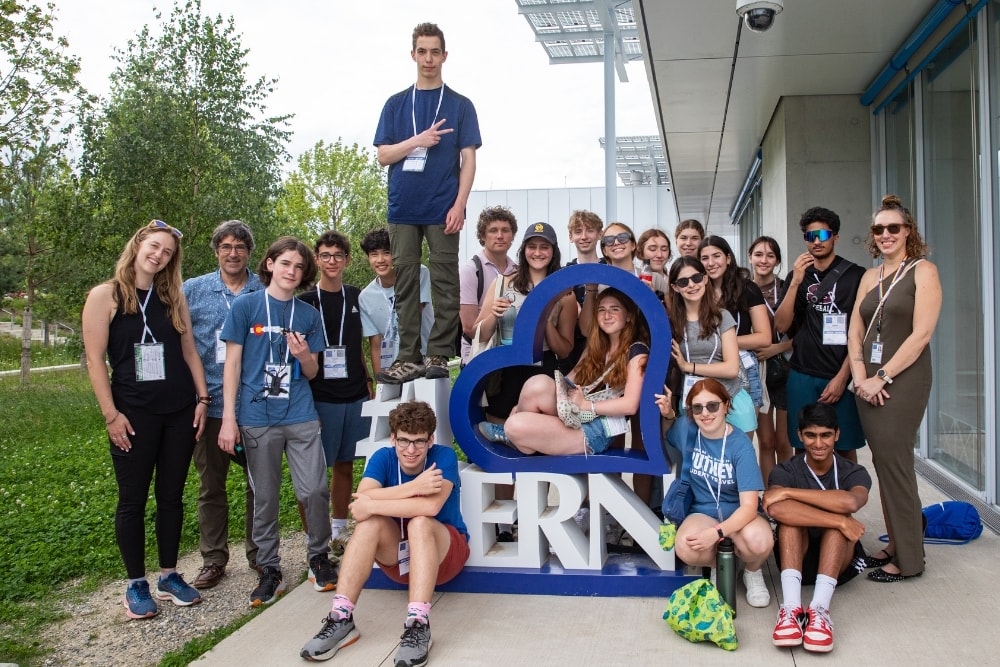
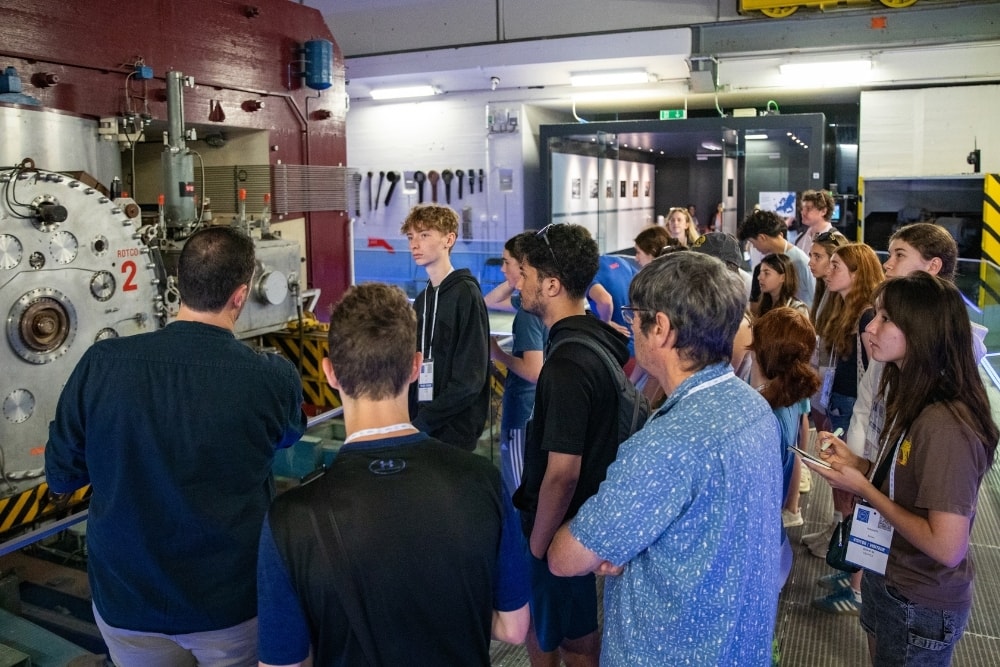
Begin in Geneva and get to know your peers and leaders with a group orientation. Gain important context and framing from your leaders, then dive into the world of physics with a visit to the European Organization for Nuclear Research, known as CERN, home of the Large Hadron Collider particle accelerator, and birthplace of the World Wide Web. At CERN, visit a physics research facility, participate in hands-on labs with CERN staff, and have lunch with researchers doing cutting-edge work. As a leading research institution with a mission to share its science, entrance and activities at CERN are free of charge to visitors and our tours are conducted by volunteer CERN Guides. Next, head to the neuroscience labs at Campus Biotech, and learn how biosensor technology is being developed to measure brain activity, with the goal of improving health outcomes for debilitating diseases. Then, dip into Swiss culture with a hands-on chocolate workshop with a world-class pastry chef.
Travel east for an immersive robotics workshop alongside professors from the Bern University of Applied Sciences. Delve into the latest theories behind technology-enhanced communication and how humans and robots communicate. Discuss the human brain’s attempts to keep up with the evolution and performance of the machines we’ve invented, while exploring spaces designed for optimum collaboration between robotic and human workers. Afterward, swim in the pristine Aare River and pay a visit to the Albert Einstein museum.
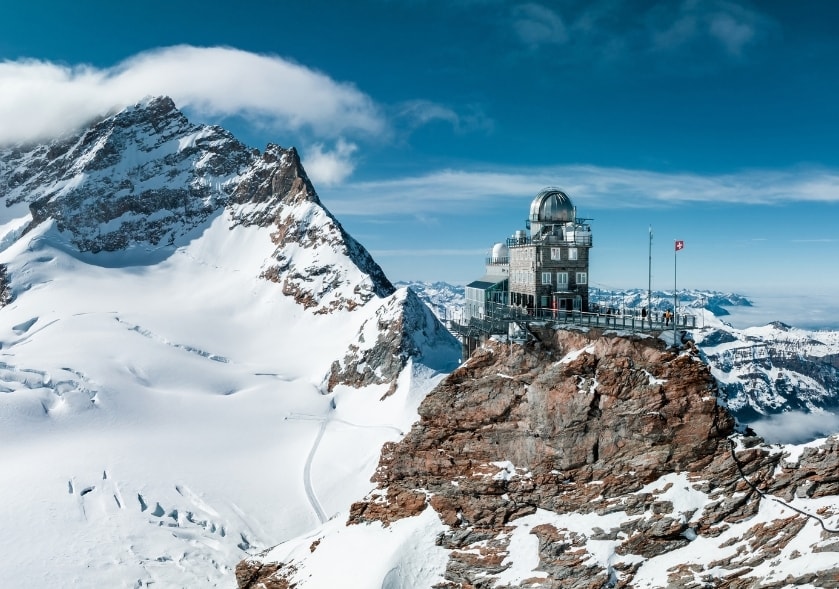
Slow down and relax on the shores of Interlaken, two lakes joined by the Aare River and ringed by snow-covered peaks. Explore the nearby valley, ride on the elegantly engineered Schilthorn Cableway, or raft down the rapids of the River Lütschine. Then ascend by train to the Jungfraujoch, the highest railway station in Europe. Here, with the dramatic Jungfrau and Eiger peaks as a backdrop, meet with climate scientists who research the effects of climate change on the Alps’ glaciers, and measure changes in the atmosphere through an ice core sampling workshop. Take an evening trip to a nearby high-elevation observatory for an astronomy discussion and observation of celestial bodies. Present your independent project to your group and enjoy a final celebratory meal, reflecting on your experiences together and what you’ve learned.
Fly from Geneva, Switzerland, to Newark with your group and a leader, then continue on to your final destination. To learn more about how we organize travel, click here.

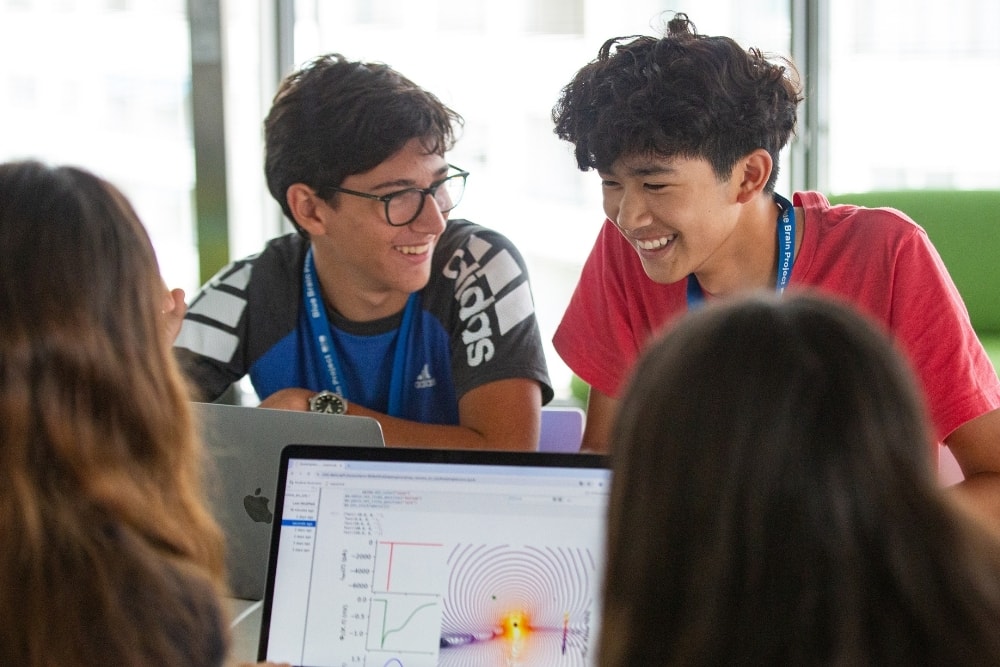
Our Career Switzerland program is a science travel program designed for high school students (grades 9–12) to explore a range of scientific topics and disciplines, including physics, biotechnology, robotics, and climate science, through daily interactions with researchers, instructors, and facilities. The labs our students visit are expressly committed to science education, and the researchers we meet are excited to work with students, passionate about their fields, and committed to educating the next generation of innovative scientific leaders, particularly from underrepresented groups. A typical day involves a laboratory visit followed by a hands-on activity designed to immerse students in current, cutting-edge research. Experts often join the group for a small-group discussion after our visit, giving students the opportunity to learn more about the life of a scientist and possible career paths in the sciences.
Proficiency in French or Swiss German is not required for this program. However, if you study either language you will have opportunities to practice while communicating with local people. If you don’t speak French or Swiss German, you will have the opportunity to learn some basic language skills.
All students on Putney programs pursue an independent project as a way to more deeply engage with the program’s themes or aspects of local culture that are of particular interest to them—in Switzerland, you might explore the ethical implications of artificial intelligence, create a blog featuring interviews with particle physicists, analyze technology used to replace damaged neurological tissue, or develop a podcast episode describing the effects of climate change on snowpack in the Alps.
To help students fully engage and immerse themselves in the Putney Student Travel experience, we do not allow use of cell phones or other internet-connected devices (including tablets, smart watches, laptops, etc.) on our middle school or high school travel programs. Students may have their cell phones during travel to and from the program. During the group’s in-country orientation, program leaders facilitate a call home, then collect and securely store all phones until departure day. Throughout the program, students have the opportunity for a weekly call home according to a pre-arranged schedule. For more details, please see our Approach to Technology.
This is a physically active summer travel program. Students can expect hiking, rafting, and city walking during their time in Switzerland. You do not need to be at peak fitness to participate, but it is important that you have a desire to be physically active, and that you are excited about trying all activities.
Yes, this program visits a few high altitude destinations—the group will spend one day at elevations over 11,000 feet/3,353 meters while visiting the Jungfraujoch, and may hike at elevations around 10,000 feet/3,048 meters on other excursions.
The group stays in small family-run hotels and inns within walking distance of parks, restaurants, and museums. In Geneva, we stay in a quiet neighborhood hotel near Lake Geneva; in Bern, a comfortable hostel just outside of the Old Town; and in Interlaken, a cozy and classically Swiss family-run hotel. Leaders reside with students for the duration of the program.
Breakfast is always taken at our accommodations. Other meals are eaten at restaurants or picnic style, depending on the day’s activities, and consist of hearty, comforting cuisines shaped by French, German, and Northern Italian influences.
Putney’s Career Switzerland program is designed for high school students with strong interests in exploring scientific fields and topics outside of the classroom, and who are curious about potential career paths in the sciences. This program is an especially good fit for those interested in the fields of physics, biology, neuroscience, robotics, and climate science. The most successful students are curious, adaptable, and excited about diving into cutting-edge research while exploring Swiss culture and landscapes.
Switzerland is an ideal setting for this science-focused program, home to world-renowned scientific research institutions alongside rich cultural diversity and striking alpine landscapes. Putney has been taking students to Switzerland since our very first program in 1951. Students gain firsthand exposure to emergent innovations while exploring a country at the crossroads of Europe’s academic discoveries and cultures. From studying alpine glacier fields with Swiss glaciologists to engaging with international neuroscientists, this program immerses students in science through varied, real-world experiences that deepen and inspire learning.
Putney’s Career Switzerland program is grounded in an interdisciplinary approach, exposing students to multiple scientific fields. Rather than focusing on a single career path, students engage with experts across settings—from advanced labs to alpine research environments. The breadth of these experiences, combined with visits to leading institutions, creates a uniquely immersive and wide-ranging exploration of science.
Students don’t need any prior experience or specific skills to join our Career Switzerland program. The program is intentionally designed to be accessible to beginners seeking an introduction to multiple scientific fields. The most successful students come with an open mind, a willingness to try new things, and the ability to participate positively in a supportive, small-group environment.
Students develop a deeper understanding of scientific fields through direct engagement with researchers and hands-on experiences. They build critical thinking, collaboration, and problem-solving skills while navigating new academic and cultural environments. Through an independent project, they also pursue a focused area of interest in depth, fostering curiosity, independence, and greater clarity about future academic and career paths.
Putney students also gain soft skills: a greater degree of confidence, independence, adaptability, and stronger communication. Living and learning in a small group also builds close friendships and a broader global perspective. Overall, students come away more self-assured, curious, and with a clearer sense of what they might want to pursue in the future.